by
by When “Hey Jude” Became a Family Letter
The audience arrived expecting nostalgia. After all, the event marked the debut of Man on the Run, a project celebrating the extraordinary life and career of Paul McCartney. There would be stories, reflections, perhaps even a triumphant performance or two. What no one expected was something far more intimate.
When McCartney stepped onto the stage, he didn’t open with a thunderous anthem or a chart-topping crowd-pleaser. Instead, he chose “Hey Jude.” And in that moment, the song shed its stadium-sized identity. It no longer felt like one of the biggest singalongs in music history. It felt like a letter — reopened.
Originally written in 1968 for Julian Lennon during the painful separation of his parents, the song was McCartney’s way of offering quiet reassurance to a child caught in the crossfire of adult heartbreak. Inspired by the split between John Lennon and Cynthia Lennon, “Hey Jude” began as “Hey Jules,” a gentle attempt to tell a young boy that things would be okay.
“Take a sad song and make it better.”
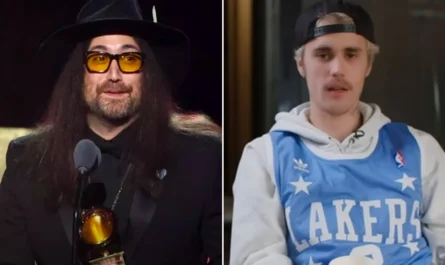
Decades later, those words returned — not as a chart-topping single, but as a deeply personal echo. In the room stood not just collaborators or industry legends, but family: Sean Lennon, Dhani Harrison, Zak Starkey, James McCartney — and Ringo Starr himself.
For a fleeting moment, the mythology surrounding The Beatles seemed to dissolve. The history, the headlines, the cultural revolution — all of it stepped aside. What remained were fathers and sons. Friends and brothers. A circle that time had changed but never entirely broken.
“Hey Jude” has always carried a communal power. Its extended coda — that endless “na-na-na” refrain — transformed it into a universal anthem of unity. But that evening, the grandiosity gave way to something softer. The performance wasn’t about mass participation. It was about memory.
Music historians often frame The Beatles’ story as one of creative genius and inevitable fracture. The breakup in 1970 marked the end of an era, and the loss of John Lennon in 1980 cemented their legacy in a bittersweet light. Yet moments like this challenge the narrative of separation. They remind us that beneath the legend was a bond that never fully disappeared.
When McCartney sang those opening lines, it wasn’t just a callback to 1968. It was a bridge — between generations, between grief and gratitude, between past and present. The song that once comforted a child now resonated among the children of the band themselves.
In that room, “Hey Jude” stopped being a performance. It became a reminder.
A reminder that songs can outlive their circumstances. That they can grow alongside the people they were written for. That even after decades of change, reconciliation, and loss, music can return to its original purpose: connection.
The audience may have expected nostalgia. What they received instead was something rarer — a glimpse into the private heartbeat behind one of the most public bands in history.
For one quiet, luminous moment, The Beatles weren’t icons carved into cultural stone.
They were family.