by
by Paul McCartney: “Making peace with John before he passed was one of the greatest blessings of my life.”
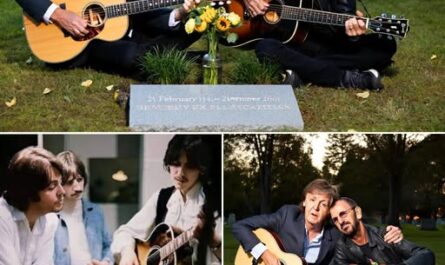
From schoolboys in post-war Liverpool to architects of modern music, Paul McCartney and John Lennon shared a bond that reshaped popular culture. As the creative core of The Beatles, their partnership produced songs that defined a generation — and a friendship that felt unbreakable.
But like many intense creative relationships, theirs was complicated. After The Beatles officially disbanded in 1970, what had once been unity turned into distance. Legal battles, business disputes, and bruised feelings — particularly surrounding management decisions and artistic control — deepened the rift. Interviews grew sharper. Songs became subtler weapons.
Tracks like “Too Many People” and “How Do You Sleep?” were widely interpreted as musical jabs, thinly veiled reflections of the hurt that lingered between them. For fans, it was painful to watch two inseparable voices drift into public rivalry.
And yet — beneath the headlines and the headlines’ hunger for drama — something quieter was happening.
A Friendship Beyond the Feud
Time has a way of softening edges. By the mid-1970s, the bitterness that once dominated their exchanges began to fade. The lawsuits were settled. The anger cooled. Life moved on.
In the documentary Paul McCartney: Man on the Run, Paul speaks with visible emotion about reconnecting with John in the years before John’s tragic death in 1980. He describes their reconciliation not as a grand, cinematic moment — but as something far more meaningful: simple, human, and real.
The two met quietly in New York. No press. No announcements. Just tea, conversation, and laughter — the kind they used to share as teenagers scribbling lyrics in each other’s bedrooms.
One story Paul recalls stands out: the night they watched Saturday Night Live together when host Lorne Michaels jokingly offered The Beatles $3,000 to reunite live on air. The idea was absurd — and yet, Paul says, they actually considered walking down to the studio. In the end, they stayed home. But the fact they laughed about it together speaks volumes.
It wasn’t about business. It wasn’t about legacy.
It was about friendship.
Love That Never Left
“We loved each other our whole lives,” Paul says in the film.
That love — complicated, competitive, deeply intertwined — never truly disappeared. Even at the height of their public disagreements, there remained an undercurrent of shared history that could not be erased. They had grown up together. They had lost their mothers young. They had faced unprecedented fame side by side. No one else in the world fully understood that experience the way they did.
Reconciliation didn’t mean rewriting the past. It meant accepting it.
By the late 1970s, they were speaking more often. The sharp edges of their earlier interviews softened. John, in his own conversations, referred to Paul less as a rival and more as an old friend. There was space again for warmth — for the recognition that what they built together would always matter more than what divided them.
The Blessing Before Goodbye
On December 8, 1980, the world changed forever when John Lennon was murdered outside his New York apartment building. The shock was global. For Paul, it was deeply personal.
In hindsight, what could have been a lifelong regret became something else: gratitude.
To have made peace.
To have laughed together again.
To have left nothing essential unsaid.
Paul has often described that reconciliation as one of the “luckiest things” in his life. Not because it erased the past, but because it allowed their story to close with love instead of bitterness.
For fans, the idea is both beautiful and heartbreaking. Two young dreamers from Liverpool who conquered the world. Two artists who challenged and pushed each other to greatness. Two friends who stumbled — and found their way back.
In the end, their final chapter wasn’t written in anger or rivalry.
It was written in tea, laughter, and quiet understanding — a reminder that even the most legendary partnerships are, at their heart, profoundly human.