by
by He Never Asked for This — But Hollywood Stopped for Him
On a stretch of pavement where noise is constant and cameras never sleep, something unusual happened on Hollywood Boulevard.
It went quiet.
Not silent in the literal sense — traffic still hummed, tourists still shuffled past, and phones were still raised in the air. But there was a shift. A pause. The kind of collective stillness that only arrives when people realize they are witnessing something meaningful.
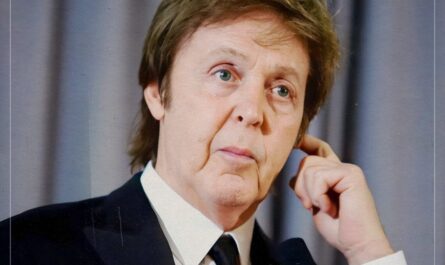
Near the historic TCL Chinese Theatre, a life-sized bronze statue of Paul McCartney was unveiled. Bass in hand. Shoulders relaxed. That familiar half-smile — less rock star, more grateful witness to his own journey.
It wasn’t a dramatic pose. It didn’t try to capture spectacle. It captured presence.
And that made it powerful.
For decades, Hollywood has honored icons with sidewalk stars and cement handprints. Recognition is part of the culture here. But this felt different. This wasn’t just about fame — it was about endurance. About a body of work so deeply woven into global memory that it no longer belongs to one generation.
As the cloth fell away from the statue, faces in the crowd told their own stories. Some people smiled quietly. Others stared, reflective. You could almost see the memories moving behind their eyes — the first time they heard “Hey Jude,” the comfort of “Let It Be,” the electric joy of a band from Liverpool that would change everything.
Long before the statue, there was a young songwriter from Liverpool who helped form The Beatles — a group that reshaped modern music and culture. What followed was not just a career, but a lifetime of reinvention: stadium tours, orchestral works, collaborations, quiet acoustic moments, and melodies that seemed to arrive effortlessly yet last forever.
The monument, approved by the Hollywood Chamber of Commerce after strong public support, recognizes more than six decades of songwriting and performance. But standing there, it didn’t feel like a bureaucratic decision. It felt like something fans had quietly wished into existence.
When McCartney stepped forward to speak, he didn’t deliver a grand speech. He didn’t lean into mythology. He simply looked moved.
“I never imagined something like this,” he said — and it sounded sincere. Not polished. Not theatrical. Just human.
That humility has always been part of his appeal. For someone whose music has filled the world’s largest arenas, he has often seemed more interested in the song than the spotlight. Perhaps that’s why the statue resonates. It doesn’t glorify. It doesn’t exaggerate. It stands calmly, almost modestly, as if aware that the real legacy isn’t bronze — it’s sound.
Around the monument, life quickly resumed. Tourists stepped forward for photos. Children asked questions. Longtime fans lingered a little longer than they meant to. Hollywood Boulevard returned to its usual rhythm.
But something remained.
Because this wasn’t just about honoring a musician. It was about acknowledging a soundtrack that has traveled through generations — from vinyl records spinning in living rooms to digital playlists streamed across continents.
It was about songs that survived trends. About choruses sung by strangers in unison. About a journey that began in Liverpool and found its way into the heart of Hollywood.
Some legacies are loud, built on headlines and spectacle.
Others are quieter — carried in melody, memory, and moments that feel deeply personal.
On that day, Hollywood didn’t just celebrate a legend.
For a brief, rare moment, it listened.