by
by In 1997, inside a modest recording studio in New York City, there was no grand stage, no farewell announcement, and no sense that history was about to quietly turn a page. George Harrison wasn’t there to say goodbye. He was simply supporting his longtime friend and musical collaborator, Ravi Shankar.
The atmosphere was relaxed — more gathering than concert. Musicians chatted. A small audience listened closely. Then, from somewhere in the room, a voice called out a request: “All Things Must Pass.”
Harrison paused.
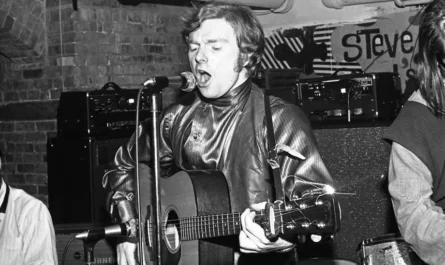
It wasn’t on the set list. There was no band arrangement prepared. But with a soft smile, he reached for an acoustic guitar. What followed wasn’t the sweeping, layered anthem fans knew from his 1970 masterpiece All Things Must Pass — it was something far more fragile.
Stripped of production, orchestration, and grandeur, the song became deeply personal. Each lyric felt reflective, almost conversational. The words about change and impermanence carried a weight that, in hindsight, feels almost prophetic. At the time, it was simply George being George — understated, sincere, and quietly profound.
There was no dramatic build. No attempt to reclaim past glory. Just a man, a guitar, and a melody that seemed to hover gently in the room.
And then, as if that moment weren’t special enough, he surprised everyone again. Harrison introduced a newer song — “Any Road,” a track that wouldn’t be widely heard until years later. Its lyrics, playful yet philosophical, reflected his lifelong spiritual outlook: if you don’t know where you’re going, any road will take you there.
He sang it lightly, almost casually.
No one in that small studio could have known that this would be the last time George Harrison would ever sing in public.
There was no announcement marking it as such. No swelling strings. No final bow. At the end, he made a soft joke — the kind of dry, gentle humor that had always defined him. Laughter rippled through the room. It felt ordinary.
That ordinariness is what makes it extraordinary now.
In the years since his passing in 2001, fans have revisited recordings and recollections of that night. Many say the most haunting part isn’t the performance itself — it’s the moment just before he began. The pause. The breath. The quiet stillness where he seemed to weigh the request before agreeing. In that brief silence, there’s something almost sacred — as if time slowed, offering a final glimpse of an artist who had long stepped away from the spotlight.
Harrison never chased the stage the way some of his peers did. Even during his years with The Beatles, he often appeared content to stand slightly to the side, observing. After the band’s breakup, he embraced spirituality, gardening, family life, and selective musical projects over constant touring.
Which makes that small 1997 performance feel even more intimate. It wasn’t a comeback. It wasn’t promotion. It wasn’t spectacle.
It was simply George.
Looking back, “All Things Must Pass” feels less like a request from the audience and more like a quiet summary of his life’s philosophy — that nothing lasts forever, and that beauty often lies in accepting that truth.
There was no grand farewell tour. No final stadium sing-along. Just a modest studio, an acoustic guitar, and a voice that, for one last public moment, carried warmth, wit, and wisdom.
And perhaps that’s exactly how George Harrison would have wanted it.