by
by “We Came to Play Paris — Not to Rewrite History.”
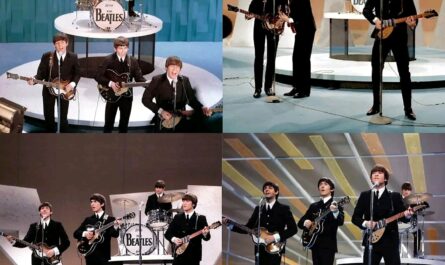
In January 1964, The Beatles arrived in the French capital with modest expectations. They weren’t yet the untouchable global phenomenon history would later describe — just four young musicians eager to prove themselves outside Britain. Booked for an 18-night residency at the legendary Olympia, they shared the bill with French pop sensation Sylvie Vartan. The plan was simple: play well, win over Paris, and move on. What unfolded instead was seismic.
Night after night, audiences inside the Olympia grew louder, more restless, more electric. At first, there was curiosity. Then fascination. Then something that no one — not promoters, not journalists, not even the band — could fully contain. The screams began to drown out the amplifiers. French teenagers, dressed in tailored coats and mod hairstyles, surged toward the stage in scenes that felt more like a cultural uprising than a concert series. Beatlemania, which had already ignited Britain, was now testing its strength on continental Europe.
Yet the most extraordinary twist happened quietly, almost invisibly. During their Paris residency, news reached the band that “I Want to Hold Your Hand” had climbed to No.1 in the United States. While they were playing to packed houses in France, America had crowned them kings of its charts. It was as if two revolutions were happening at once — one visible in the Olympia’s balconies, the other echoing across the Atlantic. The residency suddenly became a launchpad.
Newly resurfaced footage from those Paris nights captures a defining instant: the crowd’s collective roar rising to a pitch that feels almost volcanic, the band exchanging glances that mix disbelief and exhilaration. In that moment, something shifts. This was no longer a British sensation testing foreign waters. It was the birth of a global force. The borders that once defined pop markets — UK, France, America — dissolved under the sheer intensity of youth culture united by sound.
By the time the final Olympia show ended, the transformation was undeniable. Paris hadn’t simply hosted The Beatles; it had amplified them. What began as a residency became a declaration. They came to play Paris. Instead, they rewrote the rules of international stardom — and the aftershocks would be felt around the world.