by
by The “Backward” Masterpiece: Why George Harrison Called This Lennon’s Best
In the summer of 1969, while the future of The Beatles was quietly unraveling, something almost impossibly delicate emerged inside Studio Two at EMI Studios. The song was “Because.” No grand manifesto. No soaring guitar solo. Just three voices suspended in air like a held breath.
And yet, for George Harrison, it was one of John Lennon’s finest moments.
A Beethoven Piece — Played Backwards
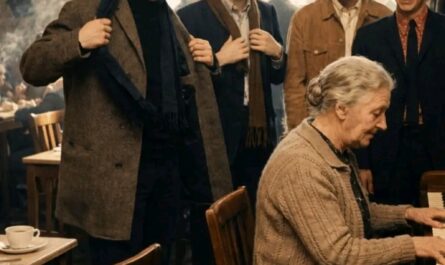
The origin story has become part of Beatles mythology. One evening, Lennon asked Yoko Ono to play Ludwig van Beethoven’s “Moonlight Sonata” on the piano. As she played, Lennon listened carefully — then made an unusual request:
Play the chords backwards.
What emerged wasn’t parody or experiment for its own sake. It was haunting. The reversed chord progression created an otherworldly harmonic bed — familiar yet unsettling. From that single piano inversion, “Because” was born.
The result would become one of the quiet centerpieces of Abbey Road, the Beatles’ final recorded album together.
Three Voices, Nine Harmonies
Unlike the explosive energy of “Come Together” or the majestic sweep of the Abbey Road medley, “Because” feels suspended in time. Lennon, Paul McCartney, and Harrison recorded their vocals three times over, layering them into a nine-part harmony so seamless it feels almost celestial.
There are no drums driving it forward. No flashy orchestration. Just a slow pulse of electric harpsichord, Moog synthesizer textures, and voices intertwined.
The simplicity is deceptive. The chord structure is intricate. The harmonies are razor-precise. And yet, emotionally, the song feels effortless — almost fragile.
That paradox is what Harrison admired most.
A Difficult Beauty in a Fractured Time
By 1969, the Beatles were drifting apart creatively and personally. Business tensions, separate artistic ambitions, and exhaustion had taken their toll. But “Because” doesn’t sound like a band breaking up.
It sounds like unity.
Perhaps that’s why Harrison spoke so highly of it. In a period filled with complex arrangements and ego clashes, Lennon stripped everything back to essence: melody, harmony, atmosphere.
There’s no obvious hook. No chorus built for radio. Instead, the song unfolds like a meditation:
“Because the world is round, it turns me on…”
The lyrics are minimal, almost abstract. Nature. Wind. Love. Sky. It feels less like storytelling and more like reflection — as if Lennon were gazing outward and inward at the same time.
Lennon’s Final Abbey Road Gift
“Because” also holds a quiet significance: it is Lennon’s last major vocal centerpiece on an album the Beatles recorded together as a functioning band. While the Abbey Road medley would close the record with shared sentiment, “Because” feels deeply personal.
The song’s placement — just before the famous side-two medley — is symbolic. It acts as a doorway, a breath before farewell.
And perhaps that’s why it lingers.
Why It Still Resonates
More than five decades later, “Because” remains one of the Beatles’ most understated masterpieces. It doesn’t demand attention; it earns it slowly. It rewards headphones. Silence. Stillness.
For Harrison, who valued spiritual depth and musical sincerity, the song represented Lennon at his most pure — not confrontational, not sarcastic, not experimental for shock value — but deeply melodic and emotionally centered.
A backward Beethoven progression. A piano in a quiet room. Three voices finding harmony while the world outside fractured.
Sometimes, the softest songs say the most.
And “Because” still echoes — not loudly, but eternally.